Sunday, October 18, 2015

Can anything good come out of there?


Out on an unknown problem somewhere between Triassic
and Joes Valley. Is there anything good out there?
Photo by Ian Crookston


45. Philip findeth Nathanael, and saith unto him, We have found him, of whom aMoses in the law, and the prophets, did bwrite, Jesus of Nazareth, the son of Joseph.
46. And Nathanael said unto him, Can there any good thing come out of Nazareth? Philip saith unto him, Come and see.

John 1:45-46


The above passage from the Bible is an interesting one. In that current age, the city of Nazareth was certainly not anything special. We can see that Nathanael was incredulous because in addition to the idea of the Savior of the world being raised in such a common place, is that the prevalent view in his day was the idea "that the Christ was to come in a royal state as seemed befitting the Son of David."1
Philip's answer is admirably simple "come and see."

Something I find beautiful about climbing is the many places to see, experience, and learn from. There is no specific arena you must play in to be a real climber, no designated hitter to call in for you, and always a tomorrow to prepare for and try again. To my perspective, that is part of the soul of climbing. There are always places to explore, new routes to climb, and all boulder problems and routes possess some part of the machine that is climbing. We can then assume that you are capable to appreciate climbing wherever you climb, your local crag or the largest meccas. Am I trying to say that your local crags are as good as the meccas? Well that depends on what values we compare, what I am comparing are many of what I consider core values of climbing (self improvement, friendship, enjoyment, exercise, an excuse to outside, adventure, education). When I do so, I realize they can be achieved wherever you are climbing.


Nazareth aka LCC


In one of my local Nazareths (Little Cottonwood Canyon) exist beautiful slabs of granite made to climb on.


A view from on high of Little Cottonwood.


Jordan reaching for his first piece from an oasis
 that is a classic LCC xenolith.


Whew, no factor 2 falls off friction slab onto
 the belay today. Now where to go?


A view of the thumb, one of the most prominent
landmarks in the canyon, from the Gate Buttress.
Can you really complain?


Rome aka Yosemite


As far as my understanding goes, the big city in Jesus's day was Rome. Starting from the history of climbing, Yosemite is still a likeness of the mecca it once was. Little Cottonwood has smeary feet, flared cracks, and finicky pro. Yosemite on the other hand, has better versions of all three (typically).


With better version of all three, no wonder
it is a Mecca!
Photo: Zeppelin Zeerip


Sorting gear while waiting in line on
The Central Pillar of Frenzy, Middle Cathedral.
Photo: Zeppelin Zeerip


The Captain across the
valleyfrom the same line.
Photo: Zeppelin Zeerip 


Everyone afloat on the
vertical ocean of granite.
Photo: Zeppelin Zeerip


1 Jesus the Christ by James E. Talmage

Wednesday, September 23, 2015

Ionic bonding in the mountains.


Looking into Idaho with the shadows of the Tetons extending west
almost to Battleship Mountain, and over Schoolroom Lake and
the South Fork of Cascade Canyon.
photo: Christian Lippert


One of the basic concepts of general chemistry is that of the ionic bond. To demonstrate it in layman's terms, I will explain the general anatomy of an atom, and we will make a few generalizations about their bonding. Stick with me for the next two paragraphs for the full explanation, or just do what my mother does and skip to the the climbing below!


The basic morphology of an atom with protons
and neutrons in the center and electrons around them.
photo from www.iflscience.com 


An atom is, at its simplest, protons and neutrons surrounded by electrons. All basic elements have different numbers of each of those three components, but they all want either eight or zero electrons in their outermost layer of electrons (called valence electrons). If they have a low number of valence electrons (say one, two, or three), it is easier for them to give up those electrons rather than try to accumulate a total of eight valence electrons. On the other hand, if an atom has a higher number of valence electrons (say five, six, or seven), they want to find electrons to add until they reach a total of eight valence electrons.

Now it is easy to see a potential mutually beneficial relationship for different atoms. When an atom with two valence electrons connects with an atom with six valence electrons, the two can be donated, and they both will be happy with either eight or zero valence electrons. This complete transfer from one atom to another is in fact, a ionic bond. Each atom is happy with the arrangement since they both, despite their differences, benefit from this electron transfer.

A picture is worth a thousand words, right?
photo from www.chm.bris.ac.uk


In a number of ways, this is easily compared to the situation when you are mentoring another climber. One of you has much greater experience and another is just starting out and learning. My point however is that there are mutual benefits. Benefits don't only exist for the mentored climber even though those are the most obvious like the transferred electrons. So what does exist for the mentor, and what does this have to do with the shadow of the Tetons?

Having spent time every year in the backcountry of the Tetons since I was fourteen (and I climbed my first technical route in the Tetons, the Enclosure Couloir, at seventeen) I am familiar and comfortable with the range. Usually because of this I end up visiting the range about once a year not for myself, but helping friends get their first taste of climbing in these mountains. I was lucky enough to do so again this month.

With these trips, I often times feel like can be a good reset button. Not only do I get to spend some casual time in such a beautiful place, but I also get to view it from a set of eyes who have never been there. As such, they are blown away and I end up valuing the location and my relationship with it even more.


Walking up to the Lower Saddle.
photo: Christian Lippert


Looking back down beautiful Garnet Canyon.
photo: Christian Lippert


Putting on our puffies and gloves for
the last cold and icy section of scrambling.
photo: Christian Lippert

Ezra looking towards Lake Solitude.
from the O.S. route

Thumbs up for the summit! Christian, Sawyer,
 Ezra, and Brad loving life.
photo: Christian Lippert


Friday, September 4, 2015

Inside the white wilderness.


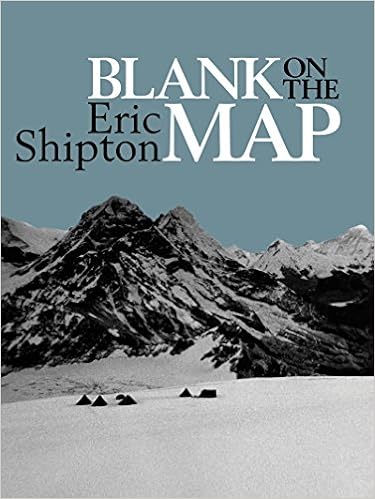
The classic book on exploring the greater ranges.
Why have designated areas of white wilderness
when you have all of the Karakoram range?

The idea is not proprietary to Reinhold Messner, although I do like his alliteration. "White wilderness" is a concept where areas are designated for adventure. Places where there are blanks on the maps, there are no topos, no mountainproject, no beta. White wilderness is were you go to experience unknown.


Santaquin


Santaquin Canyon is a place that is really not considered for rock climbing by most in the Wasatch. This is not from a lack of climbable rock, but from the white wilderness effect. This is a canyon that was designated by the "wasatch climbing founding fathers" as an area where there would be no guide books. No topos, no nada.  As such, it is not as easy and comfy as just sport climbing up American Fork. Beta passed by, and learned, from mentorship, campfire talk, and exploration.  As such, I wouldn't want to put forth much information, but some photos shouldn't hurt.


The best way to swap stories, over a campfire.
Somewhere in the Utah desert gathering more Santaquin beta.

The gem in hiding.


Tyson warming up my
projects as usual.


L. about to start cruxing.


R. on his valiant onsight attempt.


Monday, August 10, 2015

The mad dog days.


"I thought mad dogs foamed at the mouth, galloped, leaped and lunged at throats, and I thought they did it in August. Had Tim Johnson behaved thus, I would have been less frightened."
To Kill a Mockingbird by Harper Lee


August at home had certainly been hot enough to cause anyone to foam at the mouth. Dogs, sure. People, definitely. After all, how could I climb when I only wanted to go back to the air conditioned car minutes into every approach?


Summer is HOT.  So where to climb?
Consider the Devils Castle.

Specific heat is a measurement of how much heat energy something can absorb before changing
temperature 1 °C.  Limestone has a higher specific heat than granite, thus stays cooler given
the same amount of heat transferred to both stone types. 

Thank goodness for cool north facing alpine limestone walls!

Lets do another one!


Friday, July 31, 2015

Why should you climb in the alpine?

Why should you alpine climb? What is so good about it?

I mean lets be honest, I love cragging. Who couldn't? If that old adage of "you are what you eat" is true, you probably are also what you think and do. Under that definition, I am more of a sport climber than an alpine climber. Despite that, I do try to climb in the alpine. It offers many things playing around in our local canyons simply can't.

Here are reasons to alpine climb:


It may require some hard work and early mornings...


...but you do get to spend time in some beautiful places.
Whether that is the approach...
photo by Matt Berry


...or the actual climbing.
Photo by Matt Berry


Oh, did I mention the summits? A photo from perhaps
 one of the funnest and classiest summits; the Middle Teton.
Photo by Dallin Slater


You also get to see some darn cute animals!
These guys call Mt Stuart their home.


Not to mention that the actual climbing
can be outstanding.
Myself on an ephemeral line high on Timpanogas.
Photo by Joey Langford

And finally, a photo that sums up two important things. Great
temperatures for summer rock climbing, and fun!
Photo: Justin Hansen


It appears that there are more climbers than ever before. This is really noticeable when you look at the easily accessible crags. Starting this summer, trying walking a little farther!

Sunday, June 28, 2015

Make it a blessing.


Not my image, taken from http://www.mountainalbum.com.
I think it helps explain the allure Mt. Olympus holds though.


A finger injury is a real bummer for a climber, and unfortunately I drew the short straw (metaphorically) this summer. So since I was nursing my first finger injury in years, I thought it would be a perfect time to visit some old friends.


Mount Olympus is special. I am not sure I can quantify what it is, but I have long had a fascination with it.  With miles of easy terrain, it is a perfect place to climb without actually stressing anything that shouldn't be. Naturally once I had visited the slabs, I just couldn't get enough.

"wow, this is x-treme!" Despite rain clouds literally everywhere,
we decided to go check it out anyway. Sometimes you just have
to go rub your nose in it.


Our winter and spring were switched. Winter
was terribly dry and spring horribly wet....

...luckily between weather systems (and my
school schedule) we have been managing to sneak
 into the hills to maintain our (my) sanity.
How can you not love the slabs?


My first time up the slabs was when I was 14. We belayed every foot
and it took more than 13 hours round trip to complete it.


Motivated to move faster, I resolved to return later and give a shot at moving fast. I revisited the slabs and pulled out a time of 1h 31min roundtrip car-top of the slabs-car from the trailhead at Thousand Oaks Circle. I'm definitely not a runner and even stopped (though not the clock) and chatted for a few minutes during it so it felt good to pull a reasonable time out. Jared Campbell's record time of 1h 1min is quite impressive, and very inspiring. I felt the urge to start running and try again in the spring when there is lots of snow over the rock talus and I can bomb the descent down the Apollo Couloir like he did (I took the standard descent down climbing to the west then back down the ascent gully), visible in the video below. I don't feel ready to be a runner yet, so we'll see. I'm already antsy to get back onto technical terrain.


Following that urge, I wanted to climb many of the routes I began on.

Dance of the pregnant wildebeest. Officially known as 5.8,
 though sandbagged as wildly harder; I know of no other
5.8 that overhangs at least 10 feet from the start. This
was one of the first routes I ever did outside.

With an injury, a finger injury especially, it is easy to have a fatalistic approach. Now I have to take 2 months off, now I can't send my 5.XXD project, now I can only do yoga and run, etc. Having thought all of those at one time or another, I can now say there are more options. Climbing easy routes, especially jug hauls, doing long link ups of cruiser ridges in the alpine, bolting, and search for new routes are all great ways to pass the few weeks it takes before you can really start cranking again. And lets be honest, it is fun to revisit old friends.


Monday, May 25, 2015

Alaska Beta

THE place to be!

It is Spring and really THE season for climbing in the Alaska Range. So lets talk. You have routes in mind, psych that is overflowing, visions of luxurious bivies, and dreams of perfect weather. Here are some suggestions and things in no specific order to think about that might streamline your visit to that wonderful place. Some are specific to Alaska while others can be applied to whatever mountains you desire.

A comfortable place to eat, read, and use WiFi while waiting.
Photo Nathan Nelson


-For those who eat gluten free, Mountain High Pizza Pie has a selection of gluten free options such as a gluten free pizza, calzones, hummus, and salads. The Roadhouse has a specific menu for those that need it and includes just about everything they offer normally, but in a gluten free version (they also offer vegan and other choices). Their Black Bean Chowder is excellent, they offer a Roadhouse Standard (Go big and get the Full Standard!) with cornbread instead of toast. Once you have eaten, wait for flyable weather to come by combing throught their stacks of Readers Digest and eating cinnamon rolls or brownies (That are gluten free and actually good!).

- Once you get to Talkeetna if you don't have transportation because you took a shuttle, don't worry. It is small enough everything is within walking distance and some services like Sheldon Air Service (SAS) have some bikes you can borrow.

- The Alaska Mountaineering School (AMS) currently sells some gear (as of May 2015), but it is best to plan on coming with everything you need. If you forgot something though, check with them, they had most of the basic stuff you need.

Even with all that gear, you know you forgot something...


-Bring a sponge along to mop up condensation and spills (If you are mopping up are from the seams that means you did not do your pre expedition seam sealing party.) that is inside your tent.

-Bring a tent that is big. Now it is different when you're hauling it up Denali and when you set up in the Ruth and rally out of it. Since you are really not going anywhere with the one in the Ruth, you can go bigger and more comfortable than on the trudge up to 14 camp, but the idea is the same. Go big, preferably at least 1 man size bigger. Not only do you have more room to sort gear and cook if needed which is really nice, but you're not always pressed against the cold and wet walls of your tent. Another suggestion is to use a tent that has steep walls. When your sitting in there and playing board or card games, you want to be able to sit up straight and have room to move around.

Is the weather going to get better, get worse, or stay the same?
Regardless, I want to get out of this tent!
Photo by Nathan Nelson


-Skis over snowshoes. I can't say it enough.

-Lots of stuff freezes and keeping stuff close to your body is the best way to prevent that. I am always looking for base layers with pockets for that very reason. I also have my chapstick and a lighter taped to cord that can go right into my pocket. Not only does it help prevent them from spilling into the void, it makes them easier to handle with gloves on, and I keep them on my body which keeps them defrosted and useable.

-Make sure to bring extra accessory cord. This is for strapping your stuff to the sled, attaching your sled to your harness or pack, rapping off v-threads, creating hanging clothes lines in your tent for clothing to dry, fixing broken pull tabs, making them more glove friendly, or really anything.

-Stop at Costco. You are going to be working hard and needing really good food. If happen to be not working hard and are stuck in your tent on weather days, you still want good food.

A man's breakfast!


-I've used Sheldon Air Service (SAS) for flying into the range. Dave, the owner of SAS, is the longest flying pilot in the area. Growing up flying in the area, he knows the range like the back of his hand and can land you anywhere your heart desires and the laws of newtonian physics allow. Holly, his wife, drives the show back at the station and kindly helps with whatever you need. Whether that is coordinating your flight, finding lodging in Talkeetna, or anything else, she's phenomenal.

When we were stuck in the range in terrible white out weather and sure we were going to miss our flights home the next day, we heard above the clouds late in the evening, a plane. Calling Holly to ask if Dave could come grab us since it seemed someone thought the weather was hopefully turning flyable she said "thats actually him! He's been trying to find a way to get you guys." A small 20 minute window opened up just enough and he flew in, swooped us up, and we left as it was closing behind us. 

Dave opening the throttle!

Flying in style!

-I am a big fan of having a water bottle outside of your pack attached to your harness or shoulder strap. I find I hydrate and eat food much more regularly and effectively when I do so. Make sure it is insulated when you are in Alaska, you don't want to be drinking cold water unless you have been moving for a while. For inside the water bottle, it is a rarity for me to have plain water. Chia seeds never upset my digestive system and have a great balance of fats, proteins, and carbs. I also use protein powder and GU drink tabs. I try to typically eat a balance of fats, carbs, and proteins for alpine climbing and so depending on what I am eating, I will drink something else. For example I find it easy to eat a lot of carbs; granola bars, candy, GU, soups, and noodles all exemplify stuff that has mostly carbs. If that is the case, I will try to consume more fats and proteins in my water and chia seeds and protein powder are good sources of that. If I am eating something with a good balance already like trail mix or sweating from moving really fast, then I might use the GU tabs to replace electrolytes that need replacing. Of course when moving it is hard to coordinate all of this, so I keep it in a ziplock bag near the top of my pack and replace and refill my outside bottle when an opportunity appears. Such times include when belaying and changing shoes or socks.

Not Alaska, but keeping a bottle accessible to drink is really helpful.
Approaching in your base layers in warm weather, though not fashionable, helps you
prevent water loss through sweat too.
Photo by Matt Berry

-Pre cook the bacon and whatever other meats you can. I just find it easier to use, store, and consume.

-Earlier in the season, despite being "the land of the midnight sun", it still gets dark at night. Sleep with your headlamp wrapped around your wrist so you have good access to it instead of rummaging around with it lost among the clutter of water bottles, boot liners, and whatever else you want to keep warm in your bag. Another good idea is a mesh bag (the Black Diamond harness bags are ideal) to keep stuff organized inside your bag.

-For climbing rock routes during the summer, bring an "alpine straw" to suck up water that is back in cracks and running behind flakes. Another water aiding device is a small piece of tin foil that you can use to funnel that small trickle of water running on the surface into a drinkable stream.

-Make sure your glove situation is really dialed. By saying this it sounds like I have mine completely under control...I don't. I do know however that I typically get the best results from using 2-3 sets. A big puffy waterproof pair, a general purpose waterproof pair, and/or sometimes a dexterous pair. I do favor gauntlet style gloves for their ease of use. When I am cold and wet and changing gloves, I find it requires annoying amounts of energy to deal with various cuff types, snow packed velco tabs, layers, ect. If you don't deal with it, then you end up with a mess of various fabrics jammed around your wrist that limit your movement in that joint to just about nothing. With a gauntlet glove I just pop on my glove over all of it and am good to go. Another good aspect of it is that if you're using an altimeter, it can go easily under the glove and is insulated as well as protected from damage.


I think an underlying factor in what I have listed above is simplicity and ease of use. Climbing in the mountains is hard enough and so I am always trying to make the process more efficient. 

Have fun out there!